
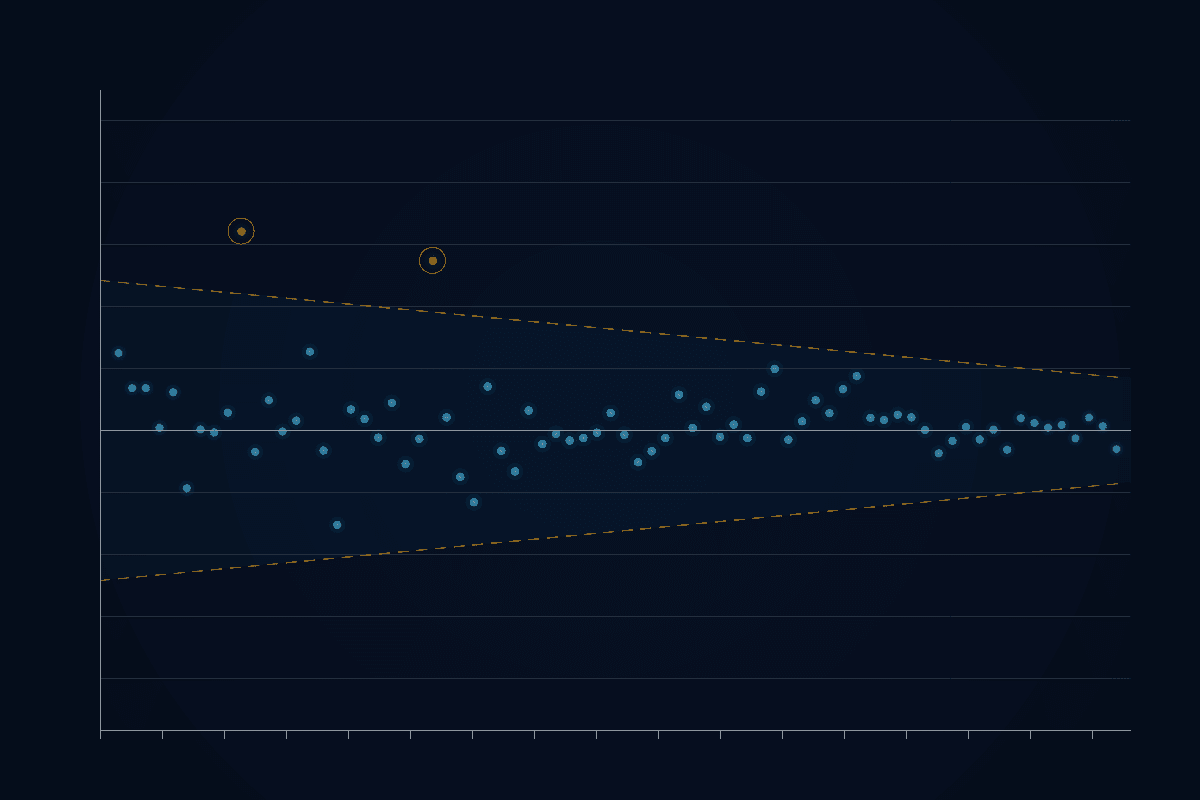
Every services firm claims quality. Very few can tell you what their rework rate actually is, because very few measure it. We do — it's the number our whole delivery model is built around, and driving it to zero costs real money before it saves any.
The cost side
First-time-right delivery starts before the first deliverable. Every analyst and designer who joins our Hyderabad ODC goes through structured training on the client's standards before touching production data — weeks of investment before a single billable unit ships. Then every batch passes through layered QC: self-check, peer review, and an independent QC pass against the acceptance spec. On paper, that's overhead. A cheaper shop would skip it and quote you a lower rate.
The savings side
The economics flip the moment you count the full cycle. A deliverable that fails client review doesn't just cost the fix — it costs the review that caught it, the re-review that clears it, the schedule slip while it loops, and the erosion of trust that makes every future delivery reviewed harder. Utilities we work with have historically budgeted 15–30% of program cost for revision cycles. When deliverables pass first review, that budget line simply disappears.
Why most firms don't do it
Because the costs are theirs and the savings are yours. A vendor billing time and materials has no structural incentive to eliminate rework — revision cycles are revenue. Fixed-scope, first-time-right delivery only makes sense if you're confident enough in your QC to absorb the risk. That confidence has to be built, batch by measured batch.
That's also why we lead with pilots. A scoped pilot lets you audit our first-time-right claim against your own acceptance criteria before committing program budget. If the QC protocol is real, it shows up in the pilot. Ours does.